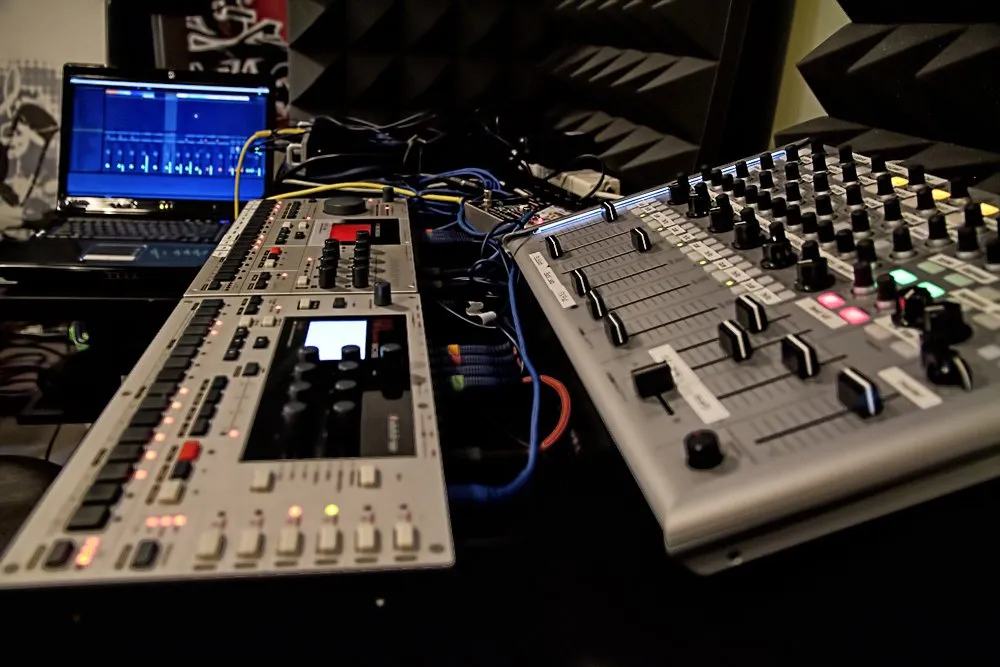

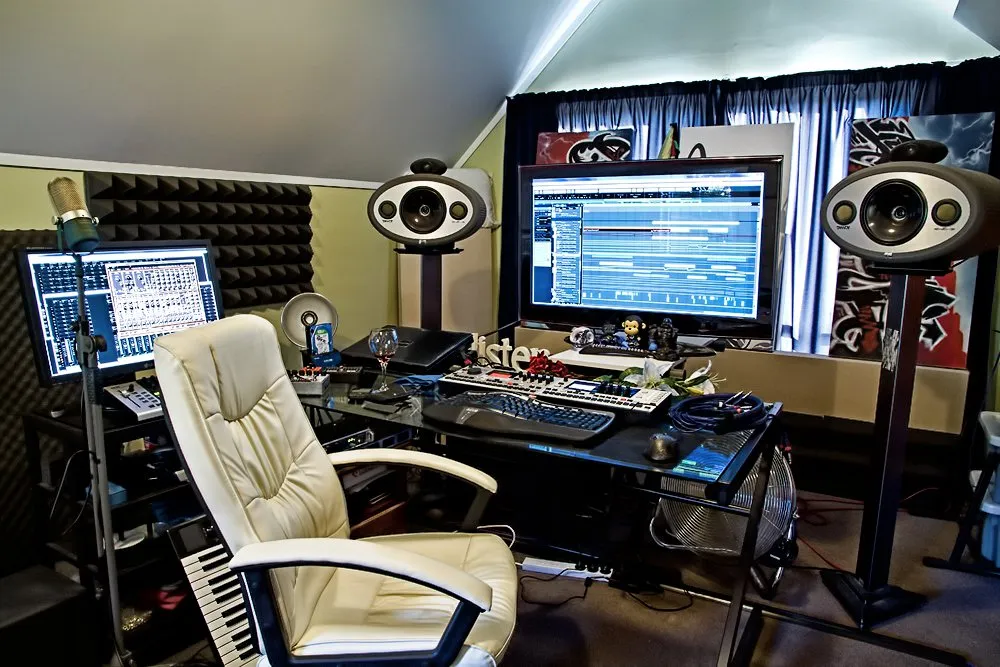
I got my start the way a lot of people do. I was the guy taking over mates’ stereos at parties. That evolved into actual DJing. Before long, I was holding down a 3 to 6 am residency at Supper Club, hosting shows on Up FM and Twisted FM, and even running an online radio station before remote streaming to a terrestrial station was really a thing. I was dragging piles of hardware around to venues for semi-improvised live PA shows. Between gigs, I was messing around with Acid and Reason to build my own tunes.
When I get into something, I dive right to the bottom. I needed to be around the gear constantly. I took a job in a hi-fi store, moved on to an importer, and eventually crossed over into the pro audio sector. I found myself heading the department for the new DJ and production store inside the old MusicWorks building on Hobson Street. That spot is now just a levelled memory, but it put me on the front lines at a pivotal time.
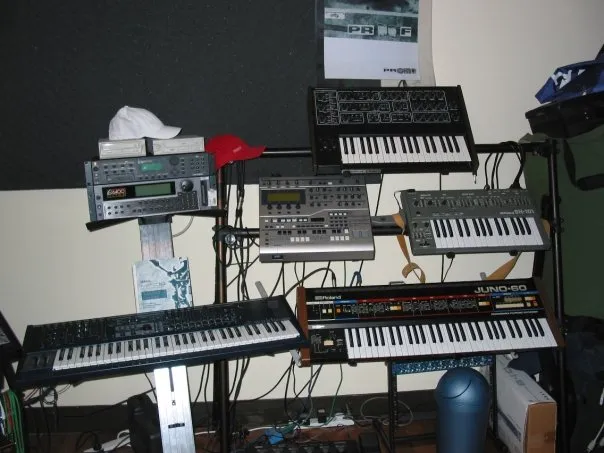
We were right on the bleeding edge of the transition. The old guard was still clinging to DAT tapes and analogue reels. DAWs had been around for a minute, but the high end was completely dominated by Pro Tools. If you did not have a massive Apple Mac rig and a second mortgage to pay for the Digidesign hardware, you were not considered a serious player. It was a notoriously fragile era.
I remember turning up to help out in a high-end control room with a full band sitting out in the tracking room, ready to go. I walked in to discover the studio tech sweating bullets. He had decided to reinstall Windows right then and there, in desperate hope of getting his Pro Tools rig to boot. We spent an anxious hour pretending to micromanage and tune the drum kit over the talkback mic. We had to stall so the band would not know the entire session was hanging by a thread while we scrambled to get the system online.
Then things fractured. The PC revolution arrived, tearing down the walls. Cubase got its massive overhaul and became Cubase SX. Suddenly, I was the National Support Manager. I was coordinating the release of Steinberg’s Cubase SX and running training seminars for staff and customers. I was designing and setting up both personal and professional studios.
Cubase SX was the tipping point. It proved you could have a professional DAW on a cheaper, more accessible PC. It democratised production. You did not need tens of thousands of dollars in proprietary hardware just to record a decent demo. The power was shifting to the bedroom producers. We were the ones taking the calls, fixing the crashes, and showing people how to route virtual instruments. We watched the recording industry change overnight.
The Burnout and the Departure
I spent years managing technical service and national sales for brands like Numark, Alesis, and Sennheiser. I represented heavyweights like Manley, Bryston, Serato, and Native Instruments. Working in the industry that long and supporting a massive array of hardware and software does something to you. You develop a weird combination of Gear Acquisition Syndrome and total burnout. You are constantly looking for the next best thing because it is your job to sell it. But you also realise very quickly that the gear does not make the musician. A bad track run through a ten-thousand-dollar compressor is just a loud bad track.
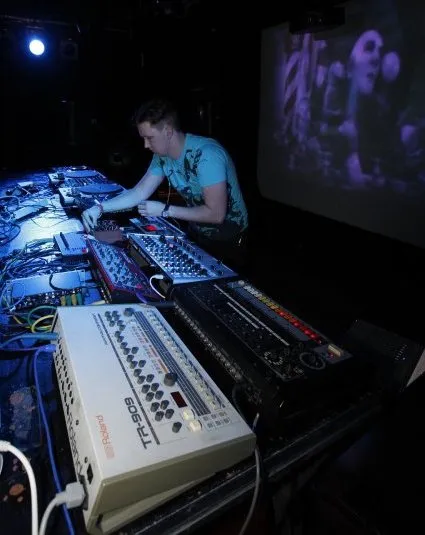
I eventually walked away from the music industry because of politics. It is a familiar story. You put in a decade of work. You grind through the transitions and the late nights. You get to the edge of a dream role representing a major software and hardware brand internationally. Then the rug gets pulled out from under you.
It leaves you jaded. It leaves you cynical. Most destructively, it kills your desire to even look at a keyboard or boot up a session.
When I left, I traded the control room for the outdoors. Hunting and the shooting industry became my focus. I needed something as far removed from a glowing monitor as possible. But community politics has a way of eventually poisoning every well. I found myself needing an escape from my escape. Ironically, that led me right back to where I started. Sitting in front of a computer screen, having a tutu with some tracks, and realising the spark was not completely dead.
The Return to the Bedroom Studio
Getting back into it after a long hiatus is a strange experience. The muscle memory is still there, but the tools have evolved. It did not happen all at once. I dabbled here and there over the years. But recently, I found myself reinstalling Ableton. I picked up a Push 2 just to get some of that physical control back under my fingers. I told myself I was just messing around. Now, a year later, I am spending more and more time back in a bedroom studio setup.
Figuring out what to write has always been a struggle. Looking back, my main musical associations did not gel with the music I really liked. I was surrounded by the house scene. I lived and dated in the inner circle of New Zealand drum and bass royalty for years. I loved those communities. I learned a massive amount from them. But I always found myself musically living on the edge of what was considered normal in those rooms.
I probably should have fallen in with the techno crew. Today, I find myself leaning heavily towards dub techno. It is an ironic shift. I absolutely hate New Zealand reggae. People consider it a sister genre to dub and, by extension, dub techno. I cannot stand skanking guitars. But replace that guitar with a heavily filtered organ. Push it through distorted, self-oscillating delays. Then I am all over it. I have such a wide variety of influences that I struggle to name exactly what the output is. I am learning not to care. My goal right now is to be comfortable putting out what I want. I am done worrying about who might like it or where it might get played.
The Reality of the Untreated Room
I know exactly how a room is supposed to sound. During my time as an acoustic specialist at Allproof, I helped fit out several serious rooms, including Coherent on K-Road. I used to have a mastering grade setup of my own. I had massive main monitors and a dedicated sub. I would sit in a tuned room and spend hours listening to the absolute minutiae of a reverb tail or a delay line fading into the noise floor. I have to remind myself that it was a long time ago. I do not have that setup right now.
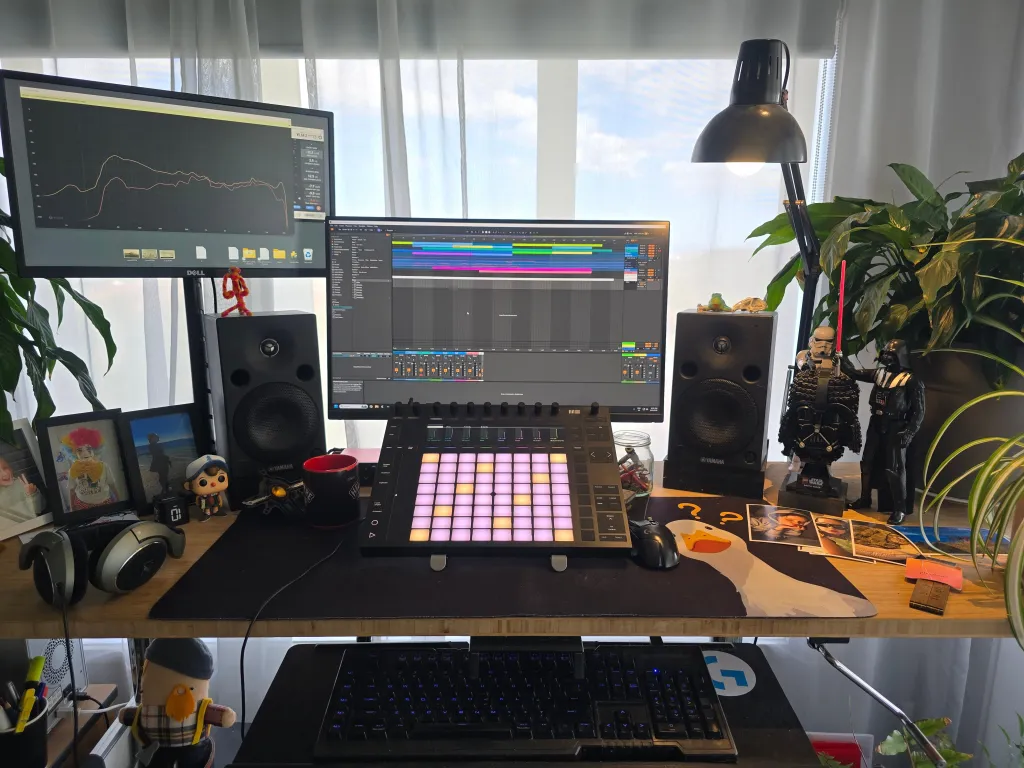
My current struggle is the reality of my environment. I am working in an acoustically untreated room with my old trusty Yamaha nearfield monitors. I was incredibly spoiled by my old studio. Because I cannot trust this current space, I find myself mixing on headphones more and more just to take the room out of the equation entirely. When I am not on the cans, mixing in the box becomes a visual exercise out of necessity. I have to rely on visual representations of sound, like analysers and meters, just to have a hope of getting a mixdown that is balanced and translates to other systems. You spend more time looking at EQ graphs than closing your eyes and listening.
The Curse of Endless Options
The immediate reality of modern production is staggering when you step away for a decade. The sheer processing power of an off-the-shelf laptop today makes the old studio towers look like pocket calculators. The limitations we used to fight, like track counts, CPU load, and DSP limits, are almost nonexistent. You have unlimited tracks. You have plugins that model legendary analogue gear so closely that the old golden ears cannot reliably tell the difference in a blind mix.
Brian Eno nailed it when he noted the danger of this exact shift while discussing his production philosophies: “In modern recording, one of the biggest problems is that you’re in a world of endless possibilities. So I try to close down possibilities early on. I limit choices.”
Having unlimited options is not always a good thing. It breeds a specific kind of paralysis. When you only had 24 tracks on a tape machine, you had to make decisions. You had to commit. If a track sounded weak, you EQed it on the desk and printed it. Today, you can leave a hundred plugins active and endlessly tweak a snare drum until the song dies of old age.
The Hybrid Future
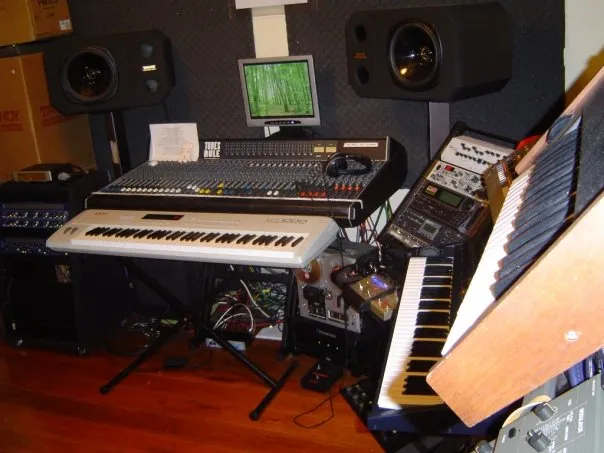
We are currently looking to purchase a new home. That means a dedicated physical space is on the horizon. I am constantly pondering how I should set it up. What do I want in there? What can I live without? Most importantly, what can I do to keep this rekindled passion burning?
I know I am not going back to a massive, heat-generating analogue desk. The modern DAW is simply too efficient to ignore. But clicking and dragging on a screen feels too detached to be my only workflow. Annie Clark (St. Vincent) summed up the modern producer’s dilemma perfectly when asked on the Tape Notes podcast why she still leans on tactile hardware over software: “That’s the thing I write emails on!” Simply using a MIDI controller to record some live automation is great, but I am strongly considering going back to a true hybrid setup. I am thinking it might be time to start building a modular synth rig. I want to track through a desk and just do the final mixdown in the box. I want to inject a true, organic, live, and somewhat unrepeatable nature back into the process.
Committing to the Sound
Sure, that makes absolutely no sense in today’s landscape of instantly recallable DAW sessions. But it cures the decision paralysis. When you track hardware, you never need to agonise over the endless tweaks you would make if you left it as MIDI. You commit to the sound, you print it, and you move forward.
Embrace the Limitations
If you are sitting in front of Ableton right now and feeling completely overwhelmed by the infinite options, you need to create your own boundaries. Limit yourself. Do not install new plugins every week in a desperate attempt to buy a new sound. Choose a handful of favourites. Learn how they work. Learn how synthesis functions at a fundamental level. Learn your craft.
Limitations are incredibly freeing. When you understand exactly what you have to work with, you stop searching and start making noise. The struggle of forcing a limited set of tools to do what you want is far more rewarding than mindlessly clicking through presets until you hear something you like. The tools are better than ever. You just have to know when to look away from the screen and trust your ears.