My desire to perform wasn’t to be a ‘DJ’ – it started with me being the kid who took over the stereo at parties, frantically swapping CDs. Seeing a DJ mixing on Max TV (R.I.P.) was a revelation; I realised you could shrink the gap between songs, and I was hooked, not on the title of ‘DJ’, but on sharing music. This obsession went beyond tunes to the very nature of sound itself: the technical science of the signal path and the raw, physical nature of bass.
A childhood diet of Alan Parsons’ synthesisers and Mandrill’s African percussion is the recipe for dance music. Still, I took the scenic route through Goth (NIN, Tool), Grunge (Nirvana, Pearl Jam), and the angrier machines of Industrial bands like Ministry. The point of no return was randomly buying a Sven Väth album. The rest, as they say, is a clichéd history. The subsequent three decades have been a blur of creative obsession.
This eclectic taste found its first real home in my early gigs: marathon eight-hour sets in the chill-out rooms of hard house parties. This, oddly, led to me mastering the subtle art of the warm-up set at house gigs—learning to behave and keep the energy just ‘one notch below’ the headliner.
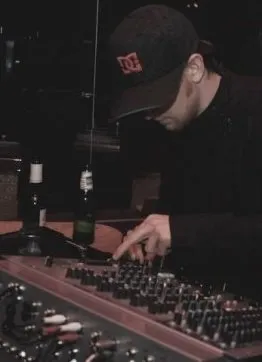
Instead of jet-setting to Ibiza, my industry experience involved working in music stores, showing aspiring DJs which MIDI cable to buy and running a mastering studio—a fancy way of saying I made other people’s kick drums loud enough to annoy their neighbours.
I was podcasting back when you needed to manually code an RSS feed to get five people to listen to me interview DJs who were far more successful than I was.
My early DJ mentors shaped my mixing – I found myself surrounded by Hard House and Deep House veterans, and then deep into Drum & Bass by a DJ partner – but the magnetic north was always, undeniably, Techno. For me, electronic music has never been about chasing transient dancefloor trends; rather, it is a space built entirely out of ideas. Rooted deeply in the timeless, “urban electronic” sound of the late 90s and early 2000s , my formative years behind the decks were soundtracked by the melancholic warmth of the European underground.
Seminal records like The Timewriter’s “Flicking Pages” didn’t just fill a record crate—they provided a structural blueprint for how profound emotionality and subtle club dynamics could perfectly coexist. While some artists talk about their influences in vague, sweeping terms, I can pinpoint the exact moments that broke my brain and permanently warped my DJing style.
Separate from what I was playing with my friends, my influences were a ransom note cut from different magazines: the relentless futurism of Jeff Mills, the surgical deconstruction of Richie Hawtin’s ‘DE9’, a specific transition in a Kevin Saunderson Deep Space radio mix, the wobbly funk of Terry Francis, and the rhythmic chaos of Q-Bert. My internal and my external were a little uncalibrated.
There was a bigger issue underlying, though.
Unfortunately, a deeply unpleasant experience on the industry side of things forced me to step away for a very long time. Though I always kept a toe in production, this extended break gave me the space to understand why performing has always been a cocktail of pure ecstasy and borderline terror. It took a recent PTSD diagnosis to understand why.
Turns out, having a bad case of Social Anxiety and Dissociative Personality Disorder is a spectacularly poor trait for a nightclub act.
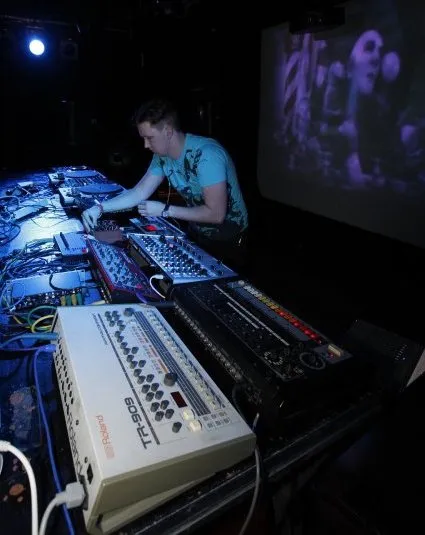
The only way I could ever function in a club environment was to have a job – performing, doing the sound, something to provide purpose and focus. So if you rarely see me gigging, this is why.
The irony is not lost on me.
These conflicts have defined my output, which is probably why I’ve cycled through aliases and styles over the years, never able to settle on one. It’s why the studio was/is my sanctuary: the stillness of an acoustically dampened room, the calm absorption, that perfect quiet within the sound coming from loud, accurate monitors. This obsessive drive is probably how I once managed to write, master, cut a track to vinyl, and play it out in a single day—a glorious, nerve-shredding act I’ll never repeat.