
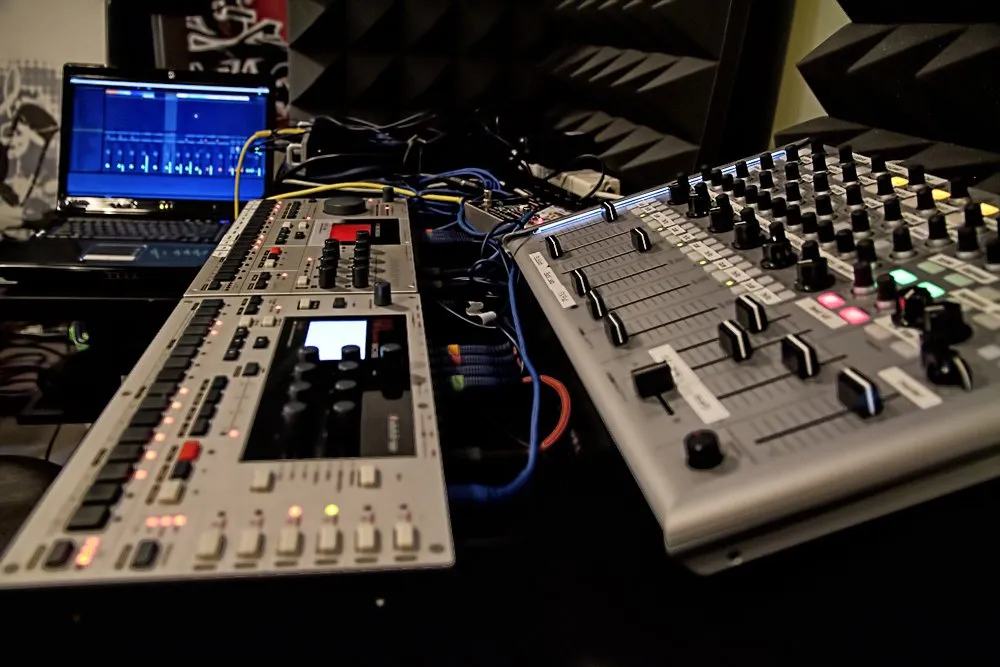
I turned 48 recently. In the music industry, that is often viewed as the sell-by date for anyone involved in electronic music. There is a weird social expectation that once you hit your late 40s, you should probably be pivoting to acoustic guitars or jazz. You are supposed to grow out of the four-to-the-floor kick drum.
The reality is that I am spending more time in the studio now than I did a decade ago. But I feel a massive disconnect. I am making dance music for a space I have absolutely no interest in visiting.
I have no idea what the Auckland club scene looks like in 2026. I do not know who the current DJs are. The truth is, a comfortable couch, a good cocktail, and a high-end hi-fi system are vastly more appealing than standing in a dark room at 4 am listening to someone else’s kicks. This is not a bitter stance against the youth. It is just a reality of where I am now. I might get up for a little boogie in the lounge, and I certainly do miss the physical punch of those giant club bass bins, but my home subwoofer does a highly respectable job of shaking the floorboards.
Anonymous in the Crowd
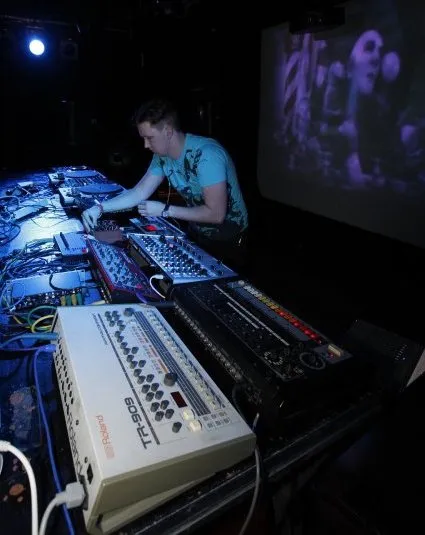
Looking back, I was never a clubber in the traditional sense. Even when I was younger and holding down a 3 am to 6 am residency at Supper Club, I was a worker. I was there for the gear, the sound system, and the technical challenge of the transition.
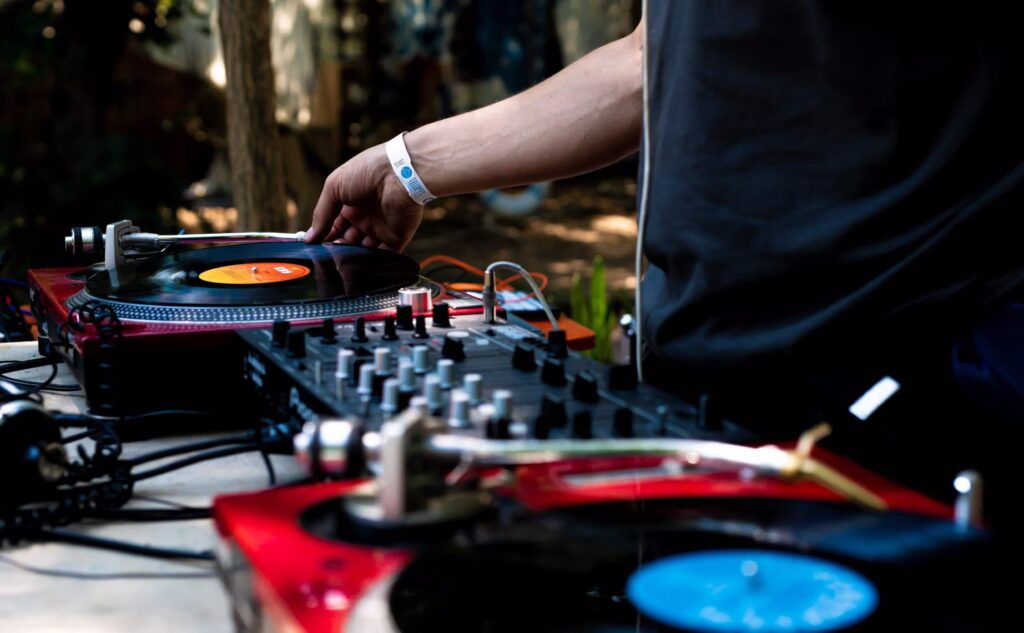
What I loved about the club was the sheer weight of the sound system and the space it provided to be alone. There is a specific kind of freedom in being anonymous in a crowd. You are surrounded by people, yet entirely within your own head, anchored by the physicality of a massive stack of speakers.
I was not there to be seen. I was there to disappear into the frequency.
Now, I am making music for a ghost of that feeling. I am chasing that same sense of anonymity and internal focus, but I am doing it from a bedroom in the suburbs rather than a booth on K-Road. The crowd has been removed. The intent remains the same. I want to create a space where I can lose myself.
The B-Room Philosophy
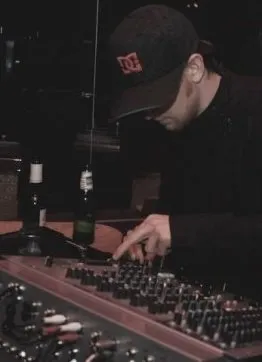
My preference was always the B-Room. The main room was about peak-time chaos. The B-Room allowed for something else. I could sit there, play tunes, and talk to the audience. We could chat about the music or the gear. It was a weird angle for a DJ, but in hindsight, it perfectly mirrored the path I eventually took into presentations, seminars, and tutorials as a National Support Manager.
That preference for connection over spectacle has followed me into 2026. It has taken me nearly twenty years to realise and finally accept that I am just as happy listening to someone talk about equipment while noodling on a synth as I am listening to a finished track.
The majority of my musical references now come from YouTube synth channels. I have discovered an entire community doing exactly what I used to do in those B-Rooms and seminar halls. They are exploring audio and visual landscapes, explaining the how and the why of a patch, and creating purely for the sake of exploration.
The 3 AM Ghost
There is a strange muscle memory that comes with having spent a decade hauling hardware to live PAs and running radio shows on Up FM and Twisted FM. When I sit in my untreated bedroom studio now, I am still thinking about how a sound will occupy a physical space.
But the crowd is now just a concept. It is a reference point for calibrating the tools.
This disconnect creates a unique creative freedom. I am not arrogant enough to assume any working DJ would want to play my tracks in a modern club anyway. Musical tastes have moved on. The scene has evolved, and that is exactly how it should be. The realisation that no one is waiting to drop your track at peak time is not a defeat. It is a massive relief.
When you stop caring if a track is club-ready for a specific venue, you start making choices that are far more interesting. You might let a track breathe for twelve minutes. You might lean into a dissonance that would clear a dancefloor but sounds incredible in your headphones. You might decide that a ten-minute video of you exploring a modular patch is more rewarding than trying to write a three-minute radio edit.
The Internal Drive
The industry wants you to think that music production is a young man’s game. They want you to believe that if you are not relevant, you are not valuable. It is a lie designed to sell software and subscriptions to people chasing fame.
For those of us who have been through burnout, the motivation is different. Rick Rubin hammers this home in his book The Creative Act:
“The audience comes last… The artist’s job is to create the work they want to see exist in the world. If you make it for someone else, you’re not making art; you’re making a product.”
At 48, I am finally done making products. I am leaning back into the audio and visual explorations that interest me.
David Bowie spoke about this exact mindset in a 1997 interview:
“Never play to the gallery… always go a little further into the water than you feel you’re capable of being in. And when you don’t feel that your feet are quite touching the bottom, you’re just about in the right place to do something exciting.”
I am well past playing to the gallery. I am in the deep water, and I am quite comfortable there.
Aging into Your Sound
If you are a veteran producer feeling that same sense of disconnect, lean into it. The fact that you are not in the club every weekend is not a weakness. It is a filter.
You have thirty years of context. You remember the fragility of a Pro Tools rig in 2002. You know the difference between real analogue compression and a digital recreation because you have smelled the dust burning off the valves.
That experience allows you to focus on what matters. The internal resonance is the only thing that counts. Whether that results in a finished track or just a late-night noodle on a modular rig does not really matter. I am turning 48, and I am finally making noise for the only person who needs to hear it.