

If you spend more than five minutes on a music production forum, you will inevitably stumble across the exact same piece of mastering advice: “You need to master your track to -14 LUFS, because that is what Spotify normalizes to.”
It is treated as gospel. It is also a fundamental misunderstanding of how audio, dynamics, and streaming algorithms actually interact.
Streaming services like Spotify, Apple Music, and Tidal absolutely do take your upload and adjust the playback level to a nominal target (usually around -14 LUFS) so that listeners don’t get their ears blown out when a playlist switches from an acoustic ballad to a heavy techno track.
But this does not mean you should be aiming for -14 LUFS in your studio. Targeting a streaming algorithm’s volume knob is a terrible way to mix a record. Here is why the math doesn’t work the way people think it does, and why you have to stop looking at the meters and start listening to the space.
The Volume Knob vs. The Sausage
The core of the misunderstanding comes down to confusing volume with density.
When Spotify applies loudness normalization, they are not putting your track through a magical algorithmic mastering compressor. They are literally just turning a digital volume fader down.
Imagine two different producers mixing a techno track.
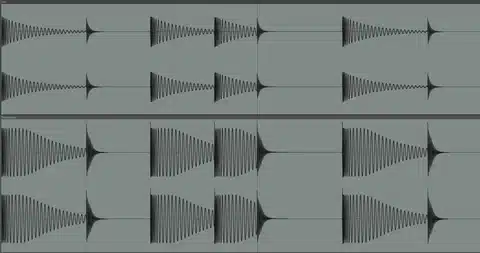
Producer A masters their track to a blistering -8 LUFS. To get a track that loud, you have to heavily limit it. You squash the transients, push the quiet parts up, and turn the waveform into a dense, solid sausage. It sounds incredibly aggressive, heavily compressed, and entirely “in your face.”
Producer B follows the internet advice and masters their track to exactly -14 LUFS. They leave the limiters alone. The kick drum transients are huge, the drops are quiet, and the track is incredibly dynamic and open.
When both tracks hit Spotify, the algorithm sees Producer A’s track is 6 dB louder than their target, so they simply turn the volume down by 6 dB.
Here is the critical reality: A -8 LUFS track turned down to -14 LUFS will still sound completely different from a track natively mastered to -14 LUFS.
Producer A’s track doesn’t suddenly become dynamic just because it is quieter. It is still heavily compressed. It is still dense. It still has that aggressive, in-your-face sonic signature. It is just playing at a lower volume.
If you want the aggressive, pumping sound of heavy limiting, you have to master loud. If you master to -14 LUFS just to appease Spotify, you will never achieve that dense club energy, no matter how much the listener turns their speakers up.
The Beatport and Bandcamp Reality Check
If you need another reason to stop treating -14 LUFS as the holy grail, you have to look outside the algorithmic streaming bubble.
Not every platform normalizes audio. If you make electronic dance music, your primary market is likely a DJ store like Beatport. Beatport does not apply any loudness normalization to their store downloads.
If you follow the internet advice and master your tech-house track to a polite -14 LUFS, it is going to sit on the digital shelf right next to club tracks mastered to a blistering -7 LUFS.
Now, the reality is that a modern DJ playing your track is either going to use the auto-gain feature in Rekordbox, or they are just going to twist the trim knob on the mixer to match the volume by ear. The noise floor on modern digital mixers is virtually non-existent, so turning the track up isn’t technically a problem.
The problem is the energy.
Even when the DJ turns your -14 LUFS track up to match the volume of the -7 LUFS track playing before it, the dynamic contrast is going to be incredibly jarring. The previous track was a dense, heavily limited block of audio; your track is wide open, with massive transient spikes and a comparatively quiet body. The perceived density of the mix will instantly drop. The sheer physical weight of the music will vanish from the club system. You have actively sabotaged your track’s playability on the dancefloor by trying to appease a Spotify algorithm.
The same rule applies to direct-to-fan platforms like Bandcamp. Bandcamp applies zero loudness normalization. What you upload is exactly what streams on their site, and exactly what the fan downloads. If you master quietly just to appease an algorithm, your audio will be significantly quieter than everything else in a fan’s downloaded collection.
Finding the Sonic Signature
You should never master to a number; you should master to a sonic signature.
Through years of trial, error, and critical listening, I know from experience that my personal sweet spot usually sits around the -12 LUFS mark. I don’t aim for it because a streaming service told me to; I aim for it because that is the exact point where my tracks start to exhibit the physical characteristics I actually want.
If I push a track much harder than that (up into the -9 or -8 LUFS range), the heavy compression starts to push everything aggressively forward. It feels like the track is shouting at the listener.
For the style of music I write, I don’t want the audio to be that far forward. I want to pull the listener in. I want the sounds to be highly present and physical, but I need there to be actual, breathable ‘space’ around the elements. There is a delicate dichotomy there: balancing the sheer weight required for electronic music against the acoustic space required for it to actually groove. Hitting around -12 LUFS gives me the density I need without completely collapsing the architecture of the mix.
But please, do not take my -12 LUFS preference and just try to copy it. It is merely a personal guideline for my specific style. You have to listen, evaluate, and form your own opinion on where your track needs to sit.
I strongly suspect that the reason so much modern electronic music is starting to sound sonically identical is precisely because everyone is mixing to a theoretical ‘perfect’ number. We are optimizing for spreadsheets and algorithms instead of letting the mix itself have a unique personality. Not everything needs to sound pristine and mathematically perfect. If you sanitize all the edges to hit a standardized metric, you lose the character. That is how we end up with Psytrance (I jest… mostly).
For example, on my most recent EP, I have three distinctly different vibes. There is a Jazzy House track that has a lot more open space in it, a Tech House tune that has more high-end energy and is pushed significantly harder, and a Deep House track that sits somewhere in the middle. I want my music to sound slightly different from track to track—not just musically, but sonically. The real challenge during the mastering phase is trying to make those three distinct sonic signatures work together as a cohesive ‘set’.
Although, if I am being brutally pragmatic, I appreciate that in the modern streaming era, almost no one is actually going to listen to them back-to-back as an EP anyway. In fact, if I am being totally blunt about it, I am mastering for it to sound good in my studio and in my car. I make music mainly for myself these days, so the rest of you are a secondary consideration.
The Alphabet Soup of Dynamics
Because we love to measure things in digital audio, people are constantly looking for the ultimate metric to prove their master is “correct.”
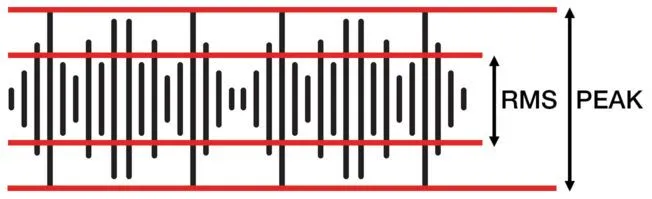
If integrated LUFS isn’t the holy grail, what is? Is the correct measurement DR (Dynamic Range)? Is it LRa (Loudness Range)? Is it the Crest Factor (the ratio of peak values to the RMS average)?
Honestly, I am not really sure.
All of those metrics are highly useful analytical tools. If your LRa is sitting at 1 LU, you know your track is a completely static brick of noise. If your Crest Factor is massive, you know your transients are completely out of control.
But I am not going for a number. None of those metrics can actually tell you if a track feels claustrophobic, or if the hi-hats feel detached from the kick drum. They cannot measure the emotional impact of a heavy sub-bass rolling through a properly treated room.
The mastering phase is the final polish of the creative process. You don’t evaluate a creative process with a spreadsheet. You evaluate it with your ears.
If your track sounds incredible, punchy, and thick at -8 LUFS, leave it there. When Spotify turns it down, it will still sound exactly like your thick, punchy track. Stop mastering for the algorithm, and start mastering for the song.