

This is the third installment in my series deconstructing my biggest musical influences. The goal is to tear down the sonic signatures of the records I treasure, reverse-engineering the operational techniques so I can integrate them into my own hybrid studio workflow.
We have looked at the cavernous, degraded void of dub techno, and the dark, swinging ghost-notes of 90s UK tech-house. Now, we are pivoting to something entirely different. We need to talk about the absolute sweet spot between clinical precision and emotional warmth.

We need to talk about Plastic City.
If you were playing house sets in the late 90s and early 2000s, you knew the challenge. Standard soulful house could sometimes get too vocal-heavy and lose its driving energy, while tech-house could easily become too cold and alienating for a mainstream room.
The German label Plastic City, spearheaded by artists like The Timewriter (Jean F. Cochois), Terry Lee Brown Jr., and Rene Breitbarth, provided the ultimate bridge. When I think of that sound, two specific masterpieces immediately come to mind: The Timewriter’s Flicking Pages, and Rene Breitbarth’s phenomenal remix of Soda Inc’s Deep Down The Road.
These tracks were deep, soulful, and undeniably bouncy, but they carried a rigid, tech-house edge. I weaved these records into countless house sets because they had the unique ability to deepen the mood of a room without ever sacrificing the kinetic energy of the dancefloor.
Here is a breakdown of how that pristine, bouncing deep house sound was engineered, and how to apply that philosophy to a modern hybrid studio.
The German Deep House Paradox
To replicate the Plastic City aesthetic, you have to understand the paradox at the heart of their production. How do you make highly sequenced, mechanical drum machines sound deeply emotional?
The answer lies in the contrast. The Plastic City sound is essentially Chicago house filtered through meticulous German engineering. Where dub techno producers intentionally degraded their synths through 12-bit samplers to create grit and noise, the Plastic City producers went in the exact opposite direction.
Their mixdowns were famously surgical. There was no muddy low-end bleed. There was no chaotic, self-oscillating tape delay consuming the midrange. Every single element, from the deepest sub-bass to the highest shaker, occupied its own distinct, perfectly carved pocket of frequencies.
If you want to build this sound, you cannot rely on saturation plugins to hide a bad mix. You have to commit to absolute clarity.
Architecting the Bounce
The defining physical characteristic of a track like Deep Down The Road is the “bounce.” It doesn’t just roll; it actively skips.
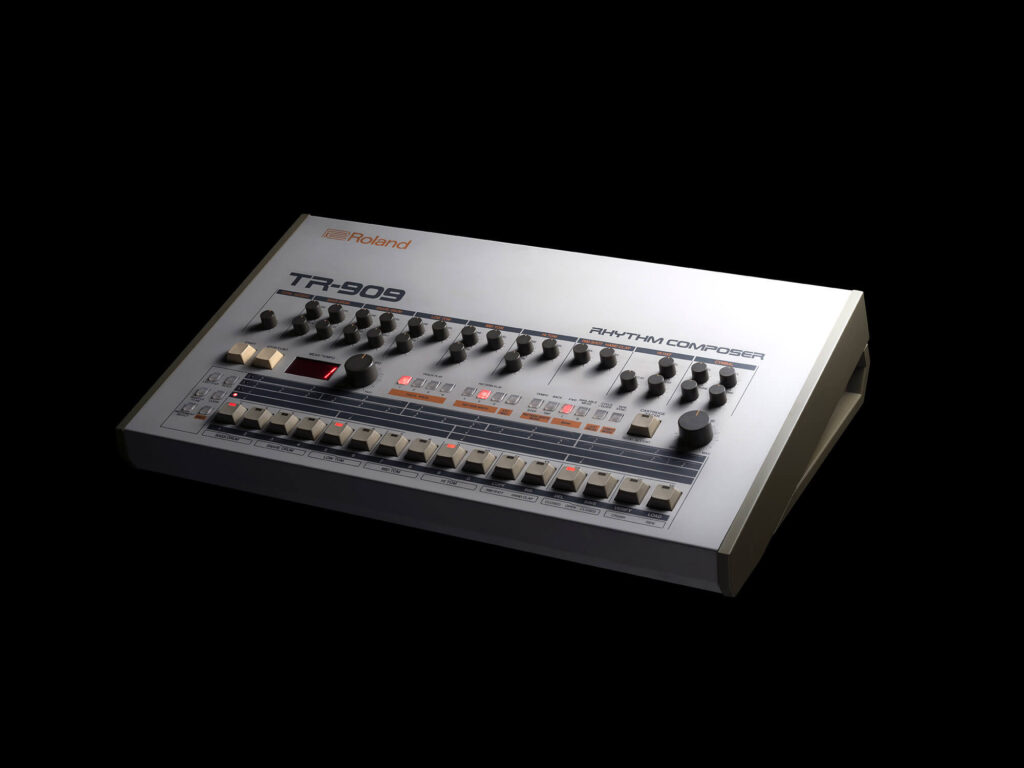
This bounce is achieved through a highly specific method of drum layering. The foundational groove relies on standard synthetic drum machines—usually a Roland TR-909 kick and snare providing the rigid, unyielding tech-house grid.
But the bounce itself comes from layering organic, acoustic percussion directly over the top of the synthetic grid. The Timewriter and Terry Lee Brown Jr. were masters at taking live conga loops, shakers, and tambourines, slicing them up, and tucking them quietly into the mix.
Operationally, you take an organic percussion loop that possesses a natural human swing. You heavily equalise it, stripping out all the low frequencies so it doesn’t clash with your kick drum. Then, you use aggressive sidechain compression, keying the organic percussion to duck out of the way every time the 909 kick hits.
The result is a synthetic, pounding downbeat followed by a rush of human, swinging, organic percussion rushing back in to fill the void. It creates a physical vacuum effect that forces the track to bounce.
The Magic of the Rompler
While analog purists scoff at them today, digital rack-mount “romplers” (ROM Playback units) like the Roland JV-1080 and 2080 were the absolute backbone of late-90s house music. Instead of generating sound from scratch via oscillators, they played back tiny, compressed samples (ROMs) of real instruments and classic synths. Because the sounds were already heavily processed and equalized at the factory, they sat perfectly in a dense electronic mix with almost no effort, providing the lush, pristine pads that defined the Plastic City era.
The Soul in the Machine: Analogue Pads
If the drums provide the tech-house skeleton, the synthesiser pads provide the deep house soul.
Tracks like Flicking Pages are anchored by lush, evolving, melancholic chord progressions. Unlike the sharp, metallic FM stabs used in dub techno, the Plastic City sound relies heavily on rich, polyphonic analogue synthesisers and late-90s digital romplers (like the legendary Roland JV-1080 and 2080).
The envelope programming here is the exact opposite of the reggae “chop.” You want a slow attack and a long release. The chords should swell into the arrangement and gently fade out, creating a continuous, warm bed of harmony.
To achieve this in the box today, you need to utilise heavy unison detuning on your soft-synths to widen the stereo image, paired with pristine, high-fidelity digital reverbs (like Lexicon emulations). The reverb tails must be long, but they must also be heavily EQ’d to remove any low-mid frequencies. The pads need to float above the bassline, never interfering with it.
The Clean Sub and the Clinical Mixdown
In earlier eras of house music, the bassline was often played on an electric bass guitar or a distinctly “plucky” synthesiser patch. The Plastic City approach was far more subterranean and clinical.
The basslines in these tracks are often pure, unfiltered sine waves or slightly rounded square waves. They provide massive physical pressure on a club system without taking up any unnecessary space in the midrange.
To achieve this pristine separation, your gain staging and EQ discipline have to be flawless. This is where my recent switch to the Topping DX5 II and HiFiMan Nano planar magnetic headphones becomes operationally critical.
You cannot mix this level of separation in an untreated bedroom with a cheap subwoofer. You need surgical, diagnostic monitoring. Every single track in your DAW needs a high-pass filter applied to it to ruthlessly cut any stray low frequencies that aren’t the kick or the sub-bass. If the kick and the bass hit at the exact same time, you must use precise volume automation or sidechaining to ensure they never fight for the exact same millisecond of digital headroom.
The Takeaway
The Plastic City era proved that you do not need distortion, noise, or aggressive drops to make a dancefloor move. You can achieve massive kinetic energy through clarity, contrast, and surgical precision.
If you want to bring this sound into your own studio, stop layering ten different synth plugins trying to make a track sound “big.” Strip it back to the absolute essentials. Build a rigid tech-house drum frame, layer it with swinging organic percussion, anchor it with a pure sine-wave sub, and wrap it in a single, emotionally complex analogue pad.
When you get the math right, the track won’t just play—it will bounce.