
This article kicks off a new series where I am tearing down the sound of my biggest musical influences. The goal is to piece together exactly how they built their sonic signatures, so I can incorporate those operational techniques into my own hybrid studio workflow.
To start, we have to talk about dub techno.
It is interesting looking back, because until relatively recently, I wouldn’t have even said I listened to a lot of dub techno. I was surrounded by the house scene for years. But when I actually dig through the vinyl I treasure the most, the evidence is undeniable. I would rarely play this stuff in a main room peak-time set, but at home, or in the B-Room where I had the freedom to basically do whatever I wanted, this was the sound I always gravitated towards.
Two specific touchstones stand out from those crates. The first is Simon Flower’s work under the moniker peak:shift. The tracks he released on the Nurture label are phenomenal, and those 12-inch presses remain some of my most prized records.
The second is King in my Empire by Rhythm & Sound. It easily ranks as one of my all-time favourite tunes. Yet, it was only relatively recently that it finally clicked in my head that Rhythm & Sound was the exact same Berlin-based duo—Moritz von Oswald and Mark Ernestus—who pioneered the entire dub techno genre under the name Basic Channel.
A massive caveat is required before we dive in. The guys behind Basic Channel and Rhythm & Sound are notoriously vague, secretive, and evasive about their exact production techniques. They do not do YouTube rig rundowns. Therefore, a lot of what follows is highly educated guesswork. It is an attempt to reverse-engineer their aesthetic through the lens of thirty years in the pro audio industry.
The Forgiving Void
If you listen to a classic dub techno track, it sounds deceptively simple. You have a kick drum, a hi-hat, and a single, echoing minor chord playing for ten minutes. To the untrained ear, it sounds like something you could throw together in Ableton Live on a Sunday afternoon.
The reality is that dub techno is notoriously difficult to produce effectively. That extreme minimalism is exactly what makes it so punishing. When you only have three elements in a mix, there is absolutely nowhere to hide. Every texture, every delay tail, and every spatial movement is placed under a microscope.
When von Oswald and Ernestus forged this sound in the early 1990s, they took the relentless, mechanical grid of 1980s Detroit techno and slammed it headfirst into the chaotic, studio-as-an-instrument methodologies of 1960s Jamaican dub reggae.
They created a sound defined by cavernous space, analogue grit, and meditative repetition. Decades later, it remains the absolute benchmark for producers chasing that deep, oceanic sound. But achieving it in a modern, pristine Digital Audio Workstation requires a serious operational shift. You have to stop programming notes and start architecting space.
The Synth and the Reggae Chop
The foundation of the entire track is usually a single sound source, typically a minor 7th or minor 9th chord.
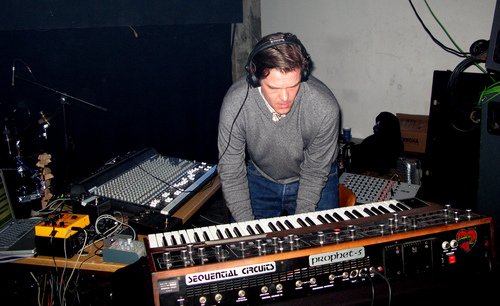
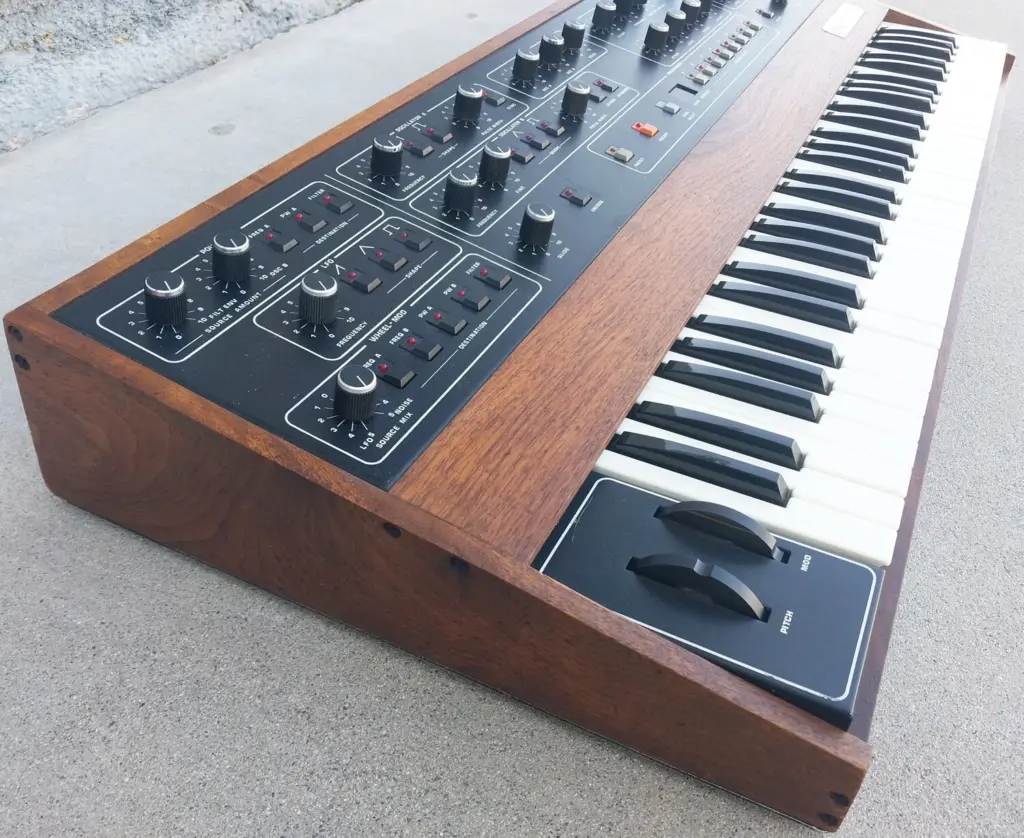
Basic Channel favoured the Sequential Circuits Prophet-5 for its dense, warm analogue oscillators, but pure analogue isn’t the only answer. The abrasive, metallic grit of early digital FM synthesis, like the Yamaha DX100, is equally crucial. An FM stab has a sharp, inharmonic bite that allows it to pierce through a massive wall of reverb without turning into mud.
But the actual tone is less important than the envelope. You are not playing a pad; you are mimicking a Jamaican reggae guitarist’s muted “skank” or “chop.”
You need a lightning-fast attack and a very short decay, with absolutely zero sustain. The sound has to hit and vanish instantly. This is physically essential to the mixdown. Because the dry signal decays immediately, it leaves an empty acoustic canvas for the massive delay and reverb tails to bloom without colliding with the original chord.
The Art of Degradation
If you fire up a modern soft-synth, dial in a minor chord, and throw a delay on it, it will sound terrible. It will sound clinical, flat, and entirely too clean.
Authentic dub techno requires an intermediate stage of aggressive degradation. Early pioneers ran their expensive synthesisers into primitive 8-bit and 12-bit samplers (like the E-mu Emulator or Prophet 2002). The low sample rates and cheap converters stripped away the pristine high-end and wrapped the sound in a dusty, harmonic distortion.
A classic operational trick to exaggerate this is the pitch-down method. You sequence your synth chord an octave or two higher than you actually want it, and record that high-pitched sound into your sampler. Then, you trigger the sample and play it back at the lower, intended pitch. Because early samplers lacked modern time-stretching algorithms, slowing the waveform down multiplies the low-fidelity artifacts, introduces heavy aliasing, and darkens the tone beautifully.
If you are working entirely in the box, you replicate this by bouncing your synth to audio and running it through a bitcrusher like D16 Decimort or Ableton’s Redux before it ever hits a delay pedal.
Architecting the Feedback Matrix
The defining characteristic of this genre is the evolving sense of space. You cannot achieve this by simply dropping a delay plugin on your synth channel. The magic lies in the routing architecture of the mixing desk.
You have to construct an interdependent feedback matrix using your auxiliary sends and returns. A standard setup might look like this:
- Aux A: A Tape Echo (emulating the unpredictable wow, flutter, and dark repeats of a Roland RE-201 Space Echo).
- Aux B: A dense Plate Reverb with a long decay.
- Aux C: A modulation effect (Chorus or Phaser).
The trick is aggressive cross-routing. You send your synth to Aux A (the delay). But you don’t just route Aux A to the master output. You send the output of Aux A heavily into Aux B (the reverb), diffusing the distinct, rhythmic echoes into a rolling wave.
Then, you take Aux B and route a small amount of it back into Aux A. This creates a localized feedback loop. (In Ableton, an old trick for the main dub reverb is setting the Dry/Wet parameter to exactly 39%, allowing the space to feel massive without completely obliterating the transient).
You control this chaos by riding the auxiliary send knobs in real-time. You perform a “dub throw”, unmuting the send for a fraction of a second to let a single chord stab enter the delay line, and then instantly closing it. You let the feedback loop rise to the absolute edge of screaming self-oscillation, and then you pull it back. It is a live performance, not an automation lane drawn with a mouse.
The Flaw of MIDI Swing (And How to Fix It)
Dub techno relies heavily on organic groove and micro-timing. It needs to lean forward and swing, otherwise, the minimal loops become robotic and exhausting.
This exposes a fundamental flaw in modern DAWs. If you apply a groove template to a MIDI clip, your synth chord will trigger with a nice, humanized off-grid bounce. But all the delay tails, echoes, and LFO sweeps generated by the plugins after the synth remain rigidly locked to the DAW’s absolute mathematical grid. The dry signal swings, but the massive reverberant wash sits stiffly in place, fighting the groove of your drums.
To solve this, modern producers use the “Resample & Gate” methodology.
You print the audio. You record your MIDI chord and its entire heavy chain of delays and reverbs directly to a new audio track. Once it is frozen as an audio file, you mute the MIDI track. You warp the new audio file in Ableton (using Beats mode, preserving transients), and you apply the global groove template directly to the printed audio.
This physically shifts the transients and the embedded delay tails simultaneously. The entire atmospheric soundscape is now locked into a single cohesive rhythmic pocket, pushing and pulling perfectly with your drum machine.
As an added bonus, resampling forces you to commit to your creative decisions, curing the endless plugin tweaking that kills so many tracks.
The Desk as an Instrument
At the absolute highest echelon of this genre sits the Zähl AM1 analogue mixing console, a boutique, uncompromising desk heavily utilized by Moritz von Oswald. It features zero-crossing circuitry to prevent clicks during rapid live manipulation and mastering-grade analogue EQs that allow for radical frequency shifts without phase smearing.
Most of us are not dropping the equivalent of a house deposit on a Zähl AM1. We are operating in hybrid environments, using multi-output audio interfaces to route digital signals out to guitar pedals and desktop delays via Ableton’s External Audio Effect.
But the philosophy remains exactly the same. You have to treat the mixer (or the mapped MIDI controller) as your primary instrument. Dub techno is not about the physical notes programmed into the sequencer. It is entirely about the masterful, real-time, operational control of the reverberant space existing between them.