

Many years ago, I had the absolute privilege of borrowing an original Roland TR-909 from local New Zealand house legend Greg Churchill.
I remember setting it up in the studio and programming the most basic, rudimentary kick, snare, and hi-hat loop imaginable. If you program that exact same static loop using digital samples in a DAW, your ear gets bored of it in about four bars. But coming out of that old grey box, the loop just rolled. It was mesmerising. It held my interest for ages, and it took me a while to figure out exactly why.
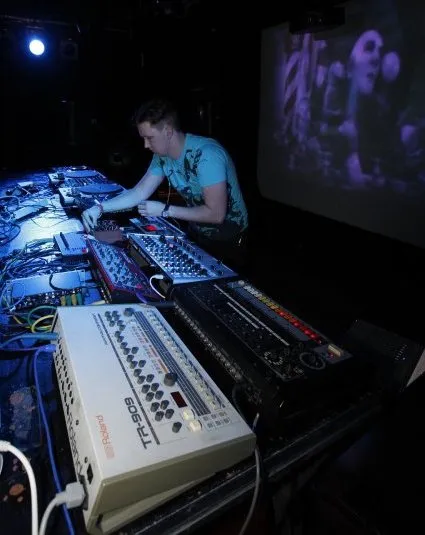
Eventually, I realised it was because nothing stayed the same.
Because it was a physical, ageing analogue machine, the voltages were constantly fluctuating. Every single time the snare hit, it was a tiny fraction of a millisecond different. The hi-hat decay fluttered slightly. The kick drum had an ever-so-slight tonal shift. That constant, microscopic novelty caught the ear and kept the brain engaged.
In minimal-leaning dance music – where we don’t rely on massive EDM build-ups, white noise sweeps, and dramatic breakdowns to create tension – that subtle, continuous change over a static sequence is the entire secret to the groove.
This brings me to the studio desk today, and why I just added a piece of hardware that is entirely dedicated to physical, acoustic imperfection. We have to talk about Spring Reverb.
Chambers, Plates, and Coils
If you want to add space to a track in 2026, you load up a pristine algorithmic reverb plugin. It mathematically calculates the exact reflections of a perfect concert hall or a tiled room.
Before the digital era, if you wanted artificial space, you had to physically build it. You had three main options. You could put a speaker and a microphone in a massive, empty tiled bathroom or stairwell—a true acoustic “echo chamber.” (I still romanticise about doing this one day, routing audio out of the studio and into a concrete basement, just to capture the real air).
If you didn’t have a spare concrete bunker, you could suspend a massive, heavy sheet of steel inside a wooden frame, attach a transducer to vibrate it, and use pickups to record the metallic resonance. This was the classic Plate Reverb (like the legendary EMT 140). I have absolutely no plans to drag a 600-pound sheet of metal into my studio anytime soon, so I rely heavily on plugins for that dense, bright plate sound.
But the third option was the Spring. And spring reverb is the exact opposite of pristine math. It is a crude, brutal, physical hack.
Originally developed for Hammond organs in the 1930s and later popularised by Leo Fender putting them into guitar amplifiers, the concept is wildly simple. You take an audio signal, convert it into physical kinetic energy, and use it to literally shake a metal spring. At the other end, a pickup converts those chaotic metal vibrations back into an electrical signal.
Because you are pushing audio through a physical piece of coiled metal, the sound gets dark, metallic, and “boingy.” It has a distinctly lo-fi, splashing characteristic that algorithmic reverbs and smooth plate reverbs completely lack.
Tubby, Basic Channel, and the Dub Ethos
In the 1970s, Jamaican engineers like King Tubby took the spring reverb (specifically the Fisher Space Expander) and fundamentally changed music. By aggressively riding the auxiliary sends on his custom mixing console, Tubby turned the reverb from a subtle background effect into a lead instrument. When you slam a snare drum into a spring tank, the physical metal crashes and splashes violently. It becomes a percussive event.
In the 1990s, Berlin producers Moritz von Oswald and Mark Ernestus (working as Basic Channel) took Tubby’s ethos and applied it directly to techno.
They took static, heavily filtered synth chords and fired them into spring tanks and tape delays, creating the absolute blueprint for Dub Techno. When you run a synthetic chord into a spring, the physical metal reacts differently depending on the velocity and frequency of the stab. Sometimes it splashes; sometimes it murmurs. It takes a sterile, sequenced note and forces it to exist in an unpredictable, physical space. Basic Channel proved that the sound of techno through a spring reverb is an entire genre unto itself.
You can use it subtly, tucked way back in the mix just to give a digital synth a sense of organic placement, or you can drive the input hard, turning the spring itself into a chaotic, splashing instrument.
The Emulation vs. The Reality
There are some incredible digital emulations of spring reverbs available today. Softube and AudioThing make fantastic plugins that model the physical characteristics of the tanks.
But just like the digital 909 samples versus Greg Churchill’s physical machine, there is just something about the physical interaction of audio in the real world that a plugin struggles to capture. An emulation is a mathematical algorithm attempting to recreate chaos. A real spring reverb is the chaos. If you tap the desk, the springs rattle. If you push the input too hot, the physical metal chokes and saturates.
I used to own a real spring tank years ago, and letting it go was one of my biggest studio regrets. I have always wanted another one to pair with the modular rig, but standard guitar-amp spring tanks are notoriously muddy, completely killing the high and low frequencies of a synth patch.
I needed a spring reverb, but I needed it to work in a modern electronic workflow.

Enter the Gamechanger Audio LIGHT
This search led me to the Gamechanger Audio LIGHT pedal. It is, without a doubt, the most innovative approach to this ancient technology I have ever seen, and it is the perfect marriage of acoustic chaos and modern control.
At its core, the LIGHT is a real, physical analog spring reverb tank. You can look through the little window on the front and literally see the three springs stretching across the chassis.
But Gamechanger Audio fixed the fundamental flaw of the traditional spring. Traditional mechanical pickups at the end of the coil lose massive amounts of frequency data. The LIGHT pedal uses infra-red optical sensors pointed directly at the springs. Instead of just relying on the mechanical vibration at the end of the line, the optical sensors “look” at the movement of the metal across the entire length of the spring simultaneously.
The result is a spring reverb that captures a massively expanded frequency range. It retains the deep subs of a modular bassline and the crisp highs of a drum machine, while still possessing that authentic, splashing, metallic tail.
But what makes it an absolute masterpiece for electronic producers is how Gamechanger utilized those optical sensors to introduce features that are physically impossible on a standard tank:
- Optical Modulation (Sweep & Tremolo): Because there are multiple optical sensors looking at different parts of the spring, the pedal can dynamically pan and fade between them. The ‘Sweep’ mode creates a lush, rolling phaser/flanger effect directly inside the reverb tail. The ‘Tremolo’ mode chops the reverb up rhythmically. It takes the static splash of a spring and forces it to move and undulate, perfectly fitting the evolving nature of minimal and dub techno.
- The Gate/Duck Knob: This is the absolute killer feature for a dance music producer. In electronic music, we heavily rely on sidechain compression to pull the reverb out of the way of the dry signal so the mix doesn’t turn to mud. The LIGHT pedal has a built-in envelope section. With the twist of a single knob, you can set the pedal to strictly “Duck” the reverb tail out of the way every time a new transient hits, or “Gate” it so the physical spring tail aggressively chops off exactly when your synth note stops. You get the chaos of the spring, instantly tamed by modern dynamic control, without having to patch a single external compressor.
- Drive and Feedback: You can push the input incredibly hot to saturate the springs, but you can also route the optical signal back into the physical transducer. This creates an infinite, howling, physical feedback loop that you can physically “play” by riding the knobs, much like King Tubby riding his mixer faders.
Routing the Chaos: The Pedal as a Plugin
To actually integrate this physical box into a modern DAW workflow takes a bit of routing architecture. I treat the LIGHT pedal exactly like a VST plugin inside Ableton, using the native ‘External Audio Effect’ device to manage the routing and dial in the compensation for the physical round-trip latency.
The digital audio leaves Ableton, travels via ADAT through the Expert Sleepers ES-8, and hits the BoredBrain Optx v2. From there, the scorching hot modular-level signal goes into an ADDAC200PI module to safely step the volume and impedance down to guitar-pedal levels. It hits the LIGHT, gets saturated in the physical springs, and runs back through the exact same chain in reverse.

Because it is physical hardware, you can’t just freeze the track or render it offline in three seconds. You have to physically ‘print’ the audio back into the computer in real-time. I will often sit there and physically ‘play’ the pedal as the track runs, twisting the drive and riding the modulation knobs. Not only does this encourage those beautiful “happy accidents” that generative workflows thrive on, but it forces me to actually commit to a recording and engineering decision. You can’t endlessly tweak it later. That friction inherently makes me a more decisive, and ultimately better, producer.
As a quick aside, this workflow heavily reminds me of the transition from film cameras to digital. I switched to digital photography as soon as I could – primarily because the cost of film was extortionate—and I would never go back. But there was a distinct magic to being limited to exactly 24 exposures (plus a couple of extra winding shots at the end of a roll). It forced you to slow down, actually think about your composition, and commit to the shot before you pressed the shutter.
And ironically, just like in the audio world where we spend massive amounts of CPU power trying to make digital audio sound wonderfully degraded and analog, I now spend a huge amount of time trying to emulate the feel of film in digital photography anyway. “Cinematic footage,” anyone?
The Verdict
We spend a lot of time in electronic music trying to make machines sound human. We draw complex velocity curves and program random LFOs, desperately trying to inject life back into a perfectly quantized grid.
Sometimes, the easiest way to get that life back isn’t to write a better algorithm. It is to take your pristine digital audio, send it out of the interface, and force it to violently shake a piece of coiled metal.
Between King Tubby’s dub delays and Basic Channel’s techno aesthetic, the spring reverb has always been the secret weapon for turning a sterile sequence into a breathing, physical space. The Gamechanger LIGHT pedal takes that crude, 1930s physics experiment and wraps it in a modern, studio-grade optical package.
It is the perfect amount of physical unpredictability, and it has absolutely earned its permanent place on the desk.