

This is the fourth installment in my series tearing down the sound of my biggest musical influences. We are looking under the hood of the tracks that actually shaped my record crates, figuring out how they were built, and translating those techniques into a modern hybrid studio.
We have covered the cavernous space of Dub Techno, the dark swing of UK Tech-House, and the pristine soul of Plastic City. Now, we have to talk about the mid-2000s. We have to talk about Minimal.
Minimal techno has a complicated legacy. Toward the end of the 2000s, it devolved into a sterile, clicky, uninspired trend where producers just threw a woodblock sample over a weak kick drum and called it a day. But before it became a parody of itself, the genre was incredibly vital, deeply hypnotic, and completely alien.
When I think of the absolute pinnacle of this sound, I look directly at the Chilean connection: Ricardo Villalobos and Luciano.
Releases on labels like Perlon and Cadenza completely rewired how I thought about dance music. Tracks like Villalobos’s Easy Lee or Luciano’s Bomberos didn’t rely on massive synth hooks or heavy bass drops. They relied on microscopic changes, extreme patience, and a bizarre fusion of cold modular synthesis with warm, organic Latin percussion.
Here is how you deconstruct that hypnotic, minimal paradigm, and why it perfectly validates stepping away from the mouse and getting your hands back on physical hardware.
The 15-Minute Canvas
The most striking thing about a Villalobos track is the length. It is not uncommon for his tracks to run for 12, 15, or even 30 minutes.
If you try to write a 15-minute track by drawing MIDI blocks on a computer screen, you will lose your mind. You will inevitably get bored and start adding massive snare rolls or unnecessary synth layers just to give your eyes something to look at on the timeline.
The Villalobos approach is entirely different. He isn’t programming a 15-minute arrangement on a grid; he is recording a live, 15-minute performance.
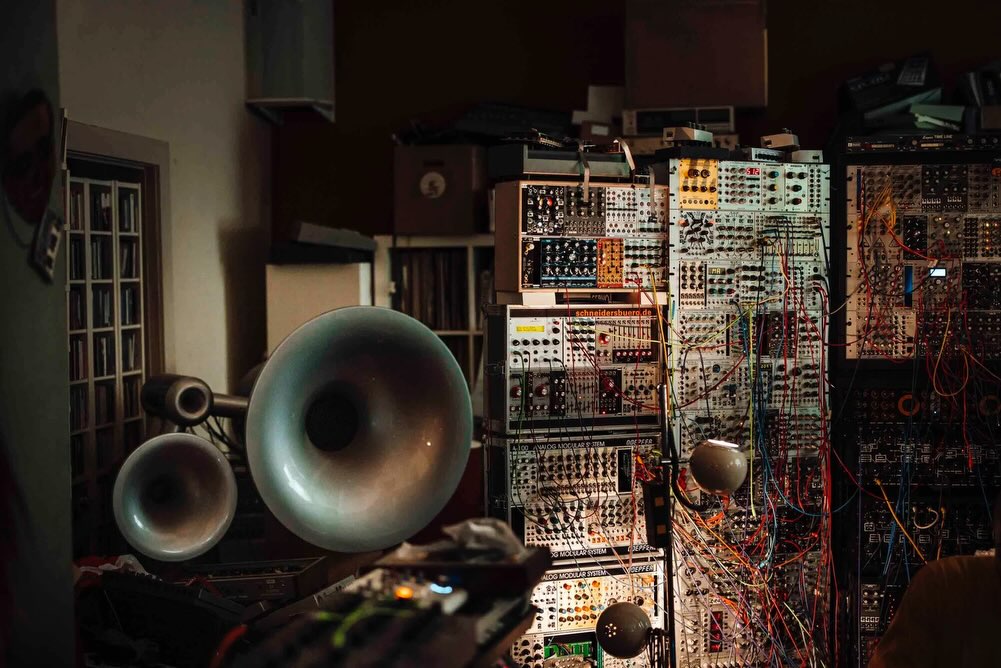
This is the exact workflow I am moving toward with my own studio build. You set up a sequence on your hardware—maybe a weird 5-step polymeter on the Oxi One driving a modular oscillator. You hit record in Ableton, treating the DAW purely as a multi-track tape machine. Then, you stop looking at the screen. You spend the next ten minutes physically riding the filter cutoff, tweaking the decay of the hi-hats, and un-muting percussion channels on a mixing desk.
The track evolves naturally because a human being is physically manipulating the electricity over time. When you work this way, the extreme length of the track isn’t a chore for the listener; it is a meditation.
The Organic vs. Synthetic Collision
While Villalobos often leans into the weird, glitchy, modular side of the sound, Luciano was the master of bringing humanity and warmth back into the mix.
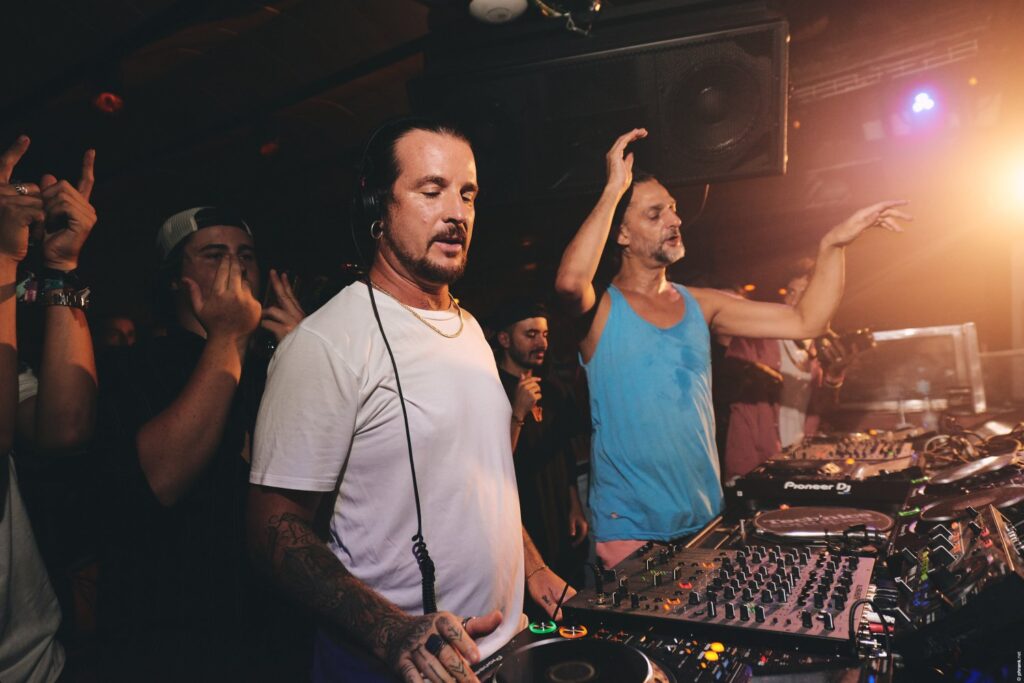
I have always had a deep, instinctual love for acoustic percussion. It stems from growing up listening to my father’s record collection, which leaned heavily into African percussion ensembles. That organic influence bled directly into how I played out. Back when I was gigging as part of the Filterbrats, our preferred setup was chaotic but highly effective: two mixers, three decks, and a couple of physical congas that we would drag along to the gig to play live over the records.
That specific live setup was deeply rooted in the Tribal House movement of the late 90s. Tribal House was the vital, sweaty bridge. It took the heavy, driving 4/4 kicks of traditional house and layered them with relentless, hypnotic polyrhythms. If you trace the lineage, it was the evolutionary stepping stone that connected the dark, rolling swing of UK tech-house directly to the stripped-back, microscopic aesthetic of mid-2000s minimal.
Because of that tribal background, Luciano’s early Cadenza releases made perfect sense to me the moment I heard them. His sound was defined by taking the rigid, synthetic thump of a Roland TR-808 or 909 kick drum and burying it under a mountain of swinging, heavily syncopated organic percussion—congas, bongos, shakers, and bells.
But he didn’t just loop a standard Latin sample. He chopped live acoustic recordings into tiny, microscopic slivers.
To replicate this, you have to get your percussion completely off the standard 16th-note grid. You take a live recording of a shaker, pitch it down so it sounds heavy and slow, and nudge it manually until it sits in the deep pocket between the kick and the clap. The tension of the Cadenza sound comes from the friction between the cold, unyielding drum machine and the loose, breathing, acoustic hand-drums pushing against it.
If you strip it all the way back, this aesthetic taps into a very primal philosophy of what dance music actually is. Long before we had massive club sound systems, we had tribes dancing around campfires in the dark to relentless, acoustic percussion. It was a ritual designed to induce a trance. When you take repetitive, hypnotic drum loops and combine them with altered states of mind—whether that is achieved through sheer physical exhaustion, the hypnotic nature of the music itself, or substance ingestion—you are recreating that exact same tribal experience. Minimal techno, particularly this organic, Latin-infused variant, is just the modern technological extension of the campfire.
The Beauty of the B-Side
The 15-minute minimal jam is a product of the vinyl era. On a standard 12-inch dance single, the A-Side was usually the primary club mix. But because vinyl physically holds about 12 to 15 minutes of audio per side at 33 RPM, producers like Villalobos would use the entire B-Side for a single, sprawling, uninterrupted modular take. It gave them the physical canvas to stretch out, modulate slowly, and let the groove evolve without worrying about radio edits or standard DJ intro lengths.
Micro-Modulation: The Devil in the Details
When your track only consists of a kick, a sub-bass, a hi-hat, and a weird vocal chirp, those four elements have to be incredibly interesting. If they just repeat perfectly for eight minutes, the dancefloor clears.
The secret to this minimal sound is micro-modulation. Nothing is static.
Every single time that synthetic hi-hat hits, it needs to sound slightly different. The decay might be a fraction longer. The pitch might flutter slightly. The filter might open up by two percent.
In a digital setup, you try to fake this by drawing endless, tedious automation curves with a mouse, or applying random LFOs to your VST parameters. It works, but it feels clinical.
In a physical hardware setup, this happens naturally. Analogue oscillators drift. Voltages fluctuate. If you route a slow, un-synced LFO into the pulse-width modulation of your bass synth, the tone of the bassline will constantly warp and shift entirely on its own. You are setting up a chaotic system and letting it breathe. You aren’t writing the changes; you are just guiding them.
The Architecture of Silence
Mixing minimal techno is a lesson in restraint. In my breakdown of dub techno, we talked about drowning the track in cross-routed tape delays and massive reverbs. The Villalobos and Luciano minimal sound is the exact opposite.
It is incredibly dry.
Reverb is used extremely sparingly, usually just to place a specific percussion hit in a weird spatial pocket for a fraction of a second. Delays are heavily utilized, but they are short, rhythmic, and tightly controlled.
Because the mix is so dry, silence becomes your primary instrument. The gap between the kick drum and the bass note is just as important as the notes themselves. This requires absolute discipline in your EQing. You cannot have any low-end rumble muddying up the space. Every sound must hit crisply and decay instantly, leaving the acoustic space completely empty before the next transient strikes.
The Takeaway
The early Perlon and Cadenza era proved that you do not need a wall of sound to move a room. True minimal techno is about confidence. It is the confidence to let a groove ride for five minutes before changing a single hi-hat pattern.
If you want to pull this vibe into your current sessions, turn the computer monitor off. Set up a short, weird sequence. Layer an organic shaker over a synthetic kick. Hit record, and just start turning knobs. Stop trying to arrange a song, and just let the machines talk to each other for a while.